
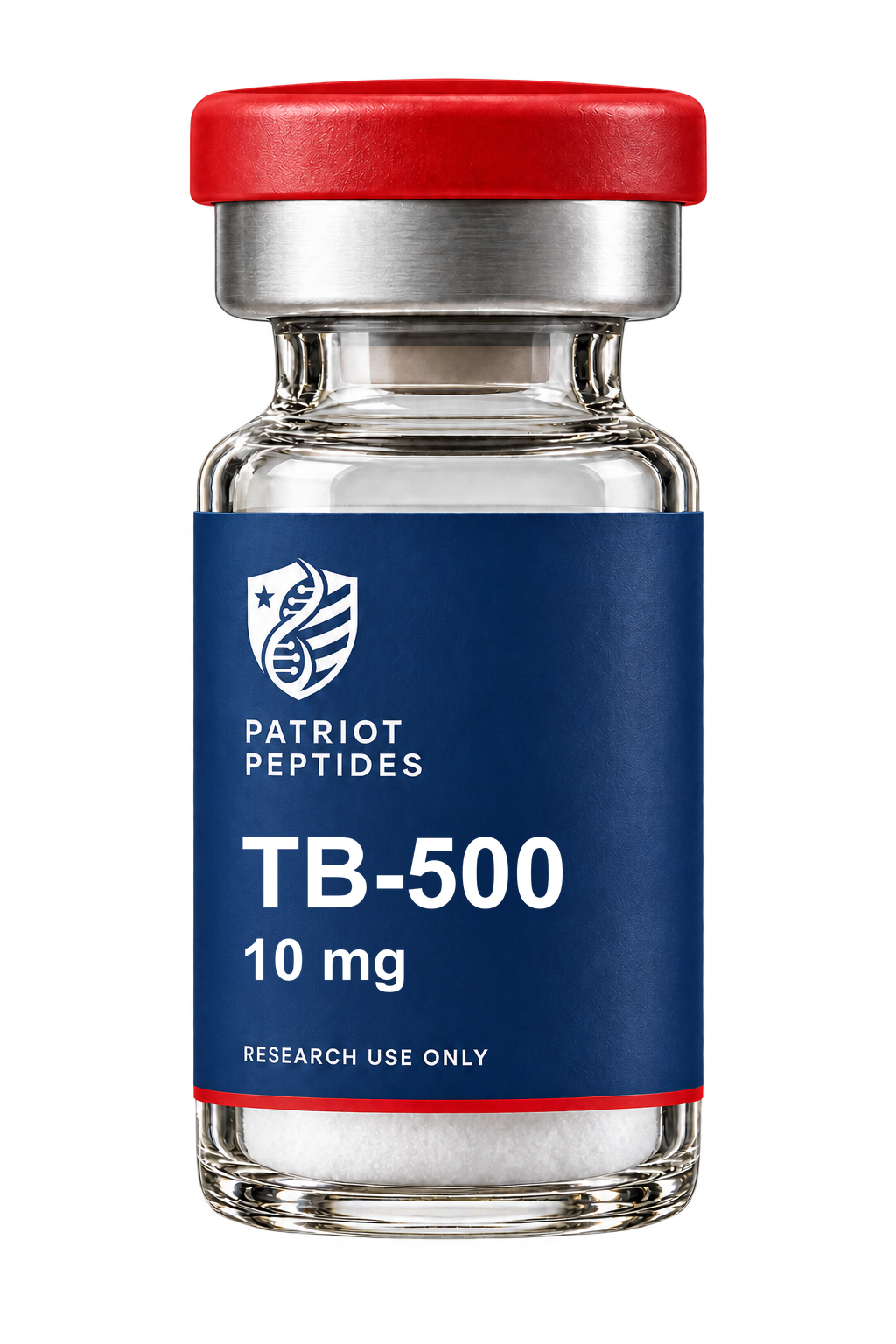
TB-500
10mg
A synthetic fragment of thymosin beta-4 used in cell-based repair and motility studies.
Bundle & save
Strength
- Ships in 24 hours
- HPLC & endotoxin verified
- Encrypted checkout
Research details
Areas of research interest
TB-500 is most often discussed in connection with wound healing, soft-tissue repair, and cardiac tissue recovery. These interests come from research on thymosin beta-4 (Tβ4), the naturally occurring protein TB-500 is derived from. Clinical development of Tβ4 has focused mainly on topical eye formulations for corneal disorders. Neither TB-500 nor Tβ4 is approved by FDA for any use.
Overview
TB-500 is a synthetic peptide derived from thymosin beta-4, a 43-amino-acid protein present in most human cells. Tβ4's best-characterized function is binding G-actin, which regulates cell shape and movement. Most published research used full-length Tβ4 rather than the shorter synthetic forms sold as TB-500.
Research summary
Wound healing. In a rat full-thickness wound model, Tβ4 applied topically or by injection increased re-epithelialization by 42% over controls at day 4 and up to 61% at day 7 [1]. Treated wounds also showed more collagen deposition and new blood vessel growth, and Tβ4 stimulated keratinocyte migration in cell assays [1].
Cardiac models. In cultured heart cells, Tβ4 promoted migration and survival by forming a complex with PINCH and integrin-linked kinase, which activated the survival kinase Akt [2]. After induced heart attack in mice, Tβ4 treatment improved early heart-muscle cell survival and cardiac function [2].
Sport. Tβ4 and its derivatives are prohibited by the World Anti-Doping Agency.
References
- 1. Malinda KM, et al. J Invest Dermatol. 1999;113(3):364–368. PMID: 10469335
- 2. Bock-Marquette I, et al. Nature. 2004;432:466–472. PMID: 15565145
For laboratory research use only. Not for human or veterinary use. This product is not a drug, food, cosmetic, or dietary supplement and is not intended to diagnose, treat, cure, or prevent any disease. These statements have not been evaluated by the FDA.