
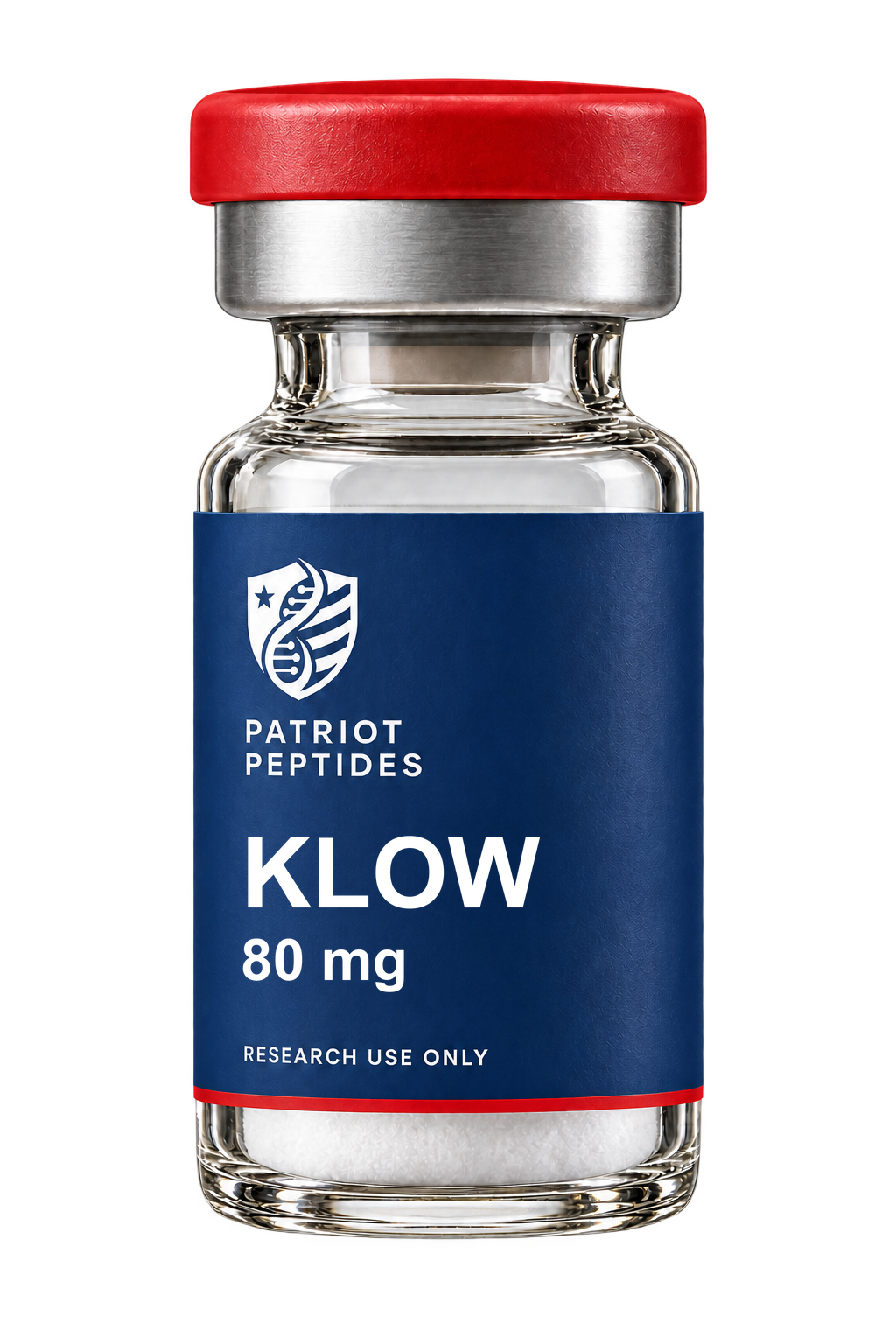
KLOW
80mg
A four-compound research blend of GHK-Cu, KPV, BPC-157, and TB-500.
Bundle & save
Strength
- Ships in 24 hours
- HPLC & endotoxin verified
- Encrypted checkout
Research details
Areas of research interest
KLOW adds KPV, a tripeptide studied in intestinal and skin inflammation models, to the three tissue-repair peptides in GLOW. The blend is most often discussed in connection with skin and soft-tissue repair alongside inflammation. None of the four peptides is approved by FDA for any use.
Overview
Each vial contains GHK-Cu (a copper-binding tripeptide), KPV (a tripeptide fragment of α-MSH), BPC-157 (a synthetic 15-amino-acid peptide), and TB-500 (a synthetic version of an active region of thymosin beta-4). See the individual product pages for each compound's background.
Research summary
Combination data. No published study has tested this four-peptide combination. The only published study combining BPC-157 and TB-500 found no added benefit over either peptide alone in a rat tendon model [1].
Component research. Oral KPV reduced chemically induced colitis in two mouse models through PepT1-mediated uptake [2]. GHK-Cu increased collagen and elastin synthesis in laboratory studies [3]. BPC-157 improved healing in a rat Achilles transection model [4], and thymosin beta-4 accelerated wound closure in a rat wound model [5].
References
- 1. Biçer O, et al. Jt Dis Relat Surg. 2026;37(3):822–837. doi: 10.52312/jdrs.2026.2951
- 2. Dalmasso G, et al. Gastroenterology. 2008. PMID: 18061177
- 3. Pickart L, Margolina A. Int J Mol Sci. 2018;19(7):1987. PMID: 29986520
- 4. Staresinic M, et al. J Orthop Res. 2003;21(6):976–983. PMID: 14554208
- 5. Malinda KM, et al. J Invest Dermatol. 1999;113(3):364–368. PMID: 10469335
For laboratory research use only. Not for human or veterinary use. This product is not a drug, food, cosmetic, or dietary supplement and is not intended to diagnose, treat, cure, or prevent any disease. These statements have not been evaluated by the FDA.